
English| EUR
Suggested for you
More currencies
Choose a language
Valletta's compact grid and car-free streets make it one of Europe's most walkable capitals, and every lane, bastion, and baroque church façade is accessible without an entrance fee. Whether you navigate solo or join a tip-based group, the fortified city reveals itself on foot and on your own terms.
Quick answer
A valletta walking tour free of charge is entirely possible: the streets, bastions, and most public squares require no ticket, and self-guided exploration costs nothing beyond your time. Tip-based group walks operate daily and ask for voluntary contributions at the end, typically between five and fifteen euros per person, though payment remains discretionary. The city's pedestrian layout and concentrated landmarks mean you can cover the core UNESCO zone in two to three hours without spending a cent.
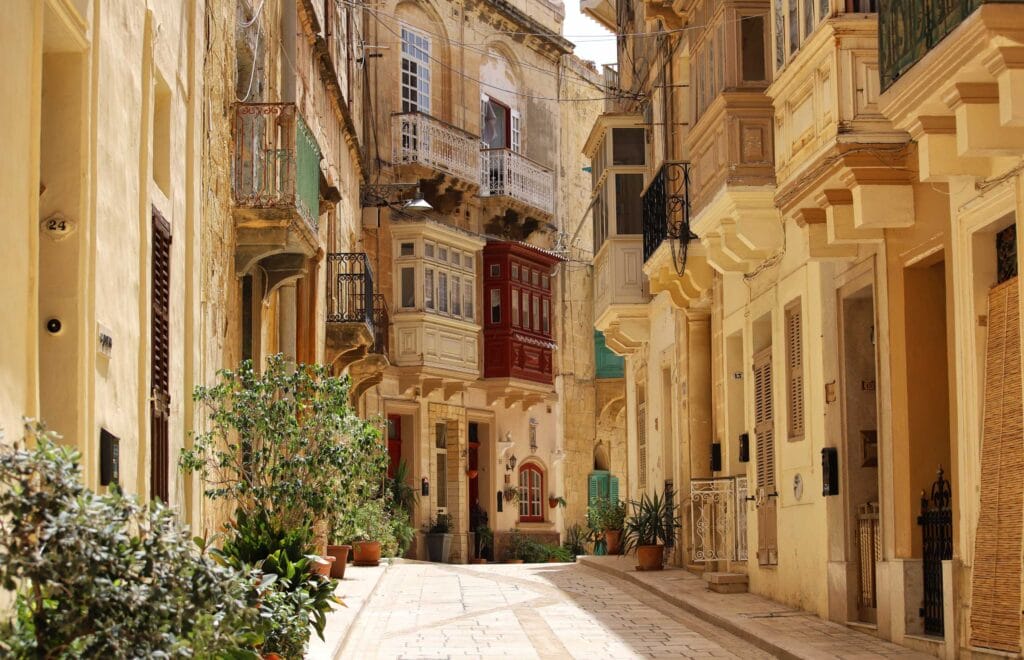
Valletta spans just 0.8 square kilometres, yet UNESCO protection covers the entire peninsula—a density of fortifications, auberges, and limestone façades unmatched in the Mediterranean. Every street is a sight line: Republic Street cuts the grid lengthwise, while the parallel alleys step down toward the harbours, each descent framed by projecting wooden balconies and wrought-iron lamps. The valletta walking tour free model works because the city itself is the monument; there are no perimeter fences, no ticket gates at the bastions, and no fee to stand in Castille Square or walk the length of St. John Street. Self-guided walkers start at City Gate, the Renzo Piano portal that replaced the British-era entrance in 2014, and follow the central artery past the co-cathedral, the Grandmaster's Palace, and the fortified tip at Fort St. Elmo. Tip-based group tours gather at the same gate each morning and late afternoon, led by licensed guides who work for gratuities rather than fixed fees. These walks last between ninety minutes and two hours, weaving through the same public spaces but adding context to the siege plaques, the knights' heraldry, and the Second World War scars still visible on corner buildings. Payment remains voluntary, though most participants leave between eight and twelve euros at the tour's conclusion. The bastions—Upper Barrakka, Lower Barrakka, and the Hastings Gardens—are free vantage points over the Grand Harbour and the Three Cities, accessible throughout the day without queuing or advance booking. The city's museums and the co-cathedral interior require separate tickets, but the urban fabric itself delivers the narrative: the grid commissioned by Francesco Laparelli in 1566, the limestone quarried from the peninsula's own moat, and the auberges that once housed each langue of the Order. A valletta walking tour free guide or printed map helps decode the heraldry and plot a route that links the main nodes, but the street pattern is legible enough that most visitors orient themselves within the first ten minutes. Arriving between nine and eleven in the morning avoids the midday glare and the afternoon cruise-ship surge, leaving the streets quieter and the shade deeper along the east-west alleys. The entire peninsula is walkable in an afternoon, though splitting the route across two visits—one for the upper city, one for the harbour bastions—lets you absorb the details without fatigue.
“The city itself is the monument; there are no perimeter fences, no ticket gates at the bastions, and no fee to stand in Castille Square.”
Admission costs for walking tours in Valletta depend on whether you choose a self-guided route or participate in an organized group tour. Self-guided exploration is accessible at no cost, while guided walking tours operate on a tip-based model.
Verdict: A typical adult pays 0 EUR for self-guided tours, while guided walking tour costs depend entirely on the voluntary tip provided to the guide.
Visitors in Valletta must choose between a self-guided independent walk or joining a tip-based guided tour. This comparison outlines how these options differ in structure and experience.
| Self-Guided Walk Independent exploration Recommended | Tip-Based Guided Tour Structured group experience | |
|---|---|---|
| Cost structure | 0 EUR fixed cost | Voluntary gratuity at end |
| Flexibility | Complete control over itinerary | Fixed route and schedule |
| Depth of narrative | Rely on own research | Curated historical commentary |
| Pace control | User-determined speed | Group-dependent pacing |
| Group interaction | None | Interaction with guide and participants |
Verdict: Choose the self-guided option for total freedom of movement, or the tip-based guided tour for professional historical insight and social interaction.
To ensure a comfortable experience, the best arrival window for a Valletta walking tour is 09:00–11:00. This timing allows visitors to navigate the city before the onset of mid-day heat and peak afternoon congestion.
Mild temperatures, 18°C to 23°C.
Ideal conditions for exploring the city streets on foot before summer heat arrives.
Pleasant temperatures, 20°C to 25°C.
Cooler air makes mid-morning walks comfortable and efficient for covering ground.
—
Arriving between 09:00–11:00 avoids the heavy cruise ship traffic and midday temperature peaks.
Verdict: The optimal time for a free walking tour is Tuesday to Thursday, arriving between 09:00–11:00 during the months of April, May, or October.
The starting point for most walking tours is the City Gate, which serves as the primary pedestrian entrance to Valletta. Visitors arriving from across Malta will find this location easily accessible via the central public transport hub situated just outside the gate.
Malta Public Transport to Valletta Terminus
Direct transfer to City Gate
Walk from Floriana via St. Anne Street
The Valletta Terminus is located directly adjacent to the City Gate, making bus travel the most efficient method for reaching the meeting point. We recommend planning your journey to arrive between 09:00–11:00 to avoid mid-day heat and peak afternoon crowds.
Valletta is a public city accessible to independent walkers at all times. Streets and public thoroughfares remain open 24 hours a day throughout the week.
Everything you need to know about valletta walking tour free
You can explore the city on your own at no cost, or join guided groups that operate on a tip-based model. While the experience is accessible to everyone, please note that professional guides usually rely on gratuities for their services. Exploring the Maltese capital allows you to discover UNESCO heritage sites like St. John's Co-Cathedral and the Grand Harbour. Taking a valletta walking tour free is an excellent way to balance your budget while seeing the city's baroque architecture.