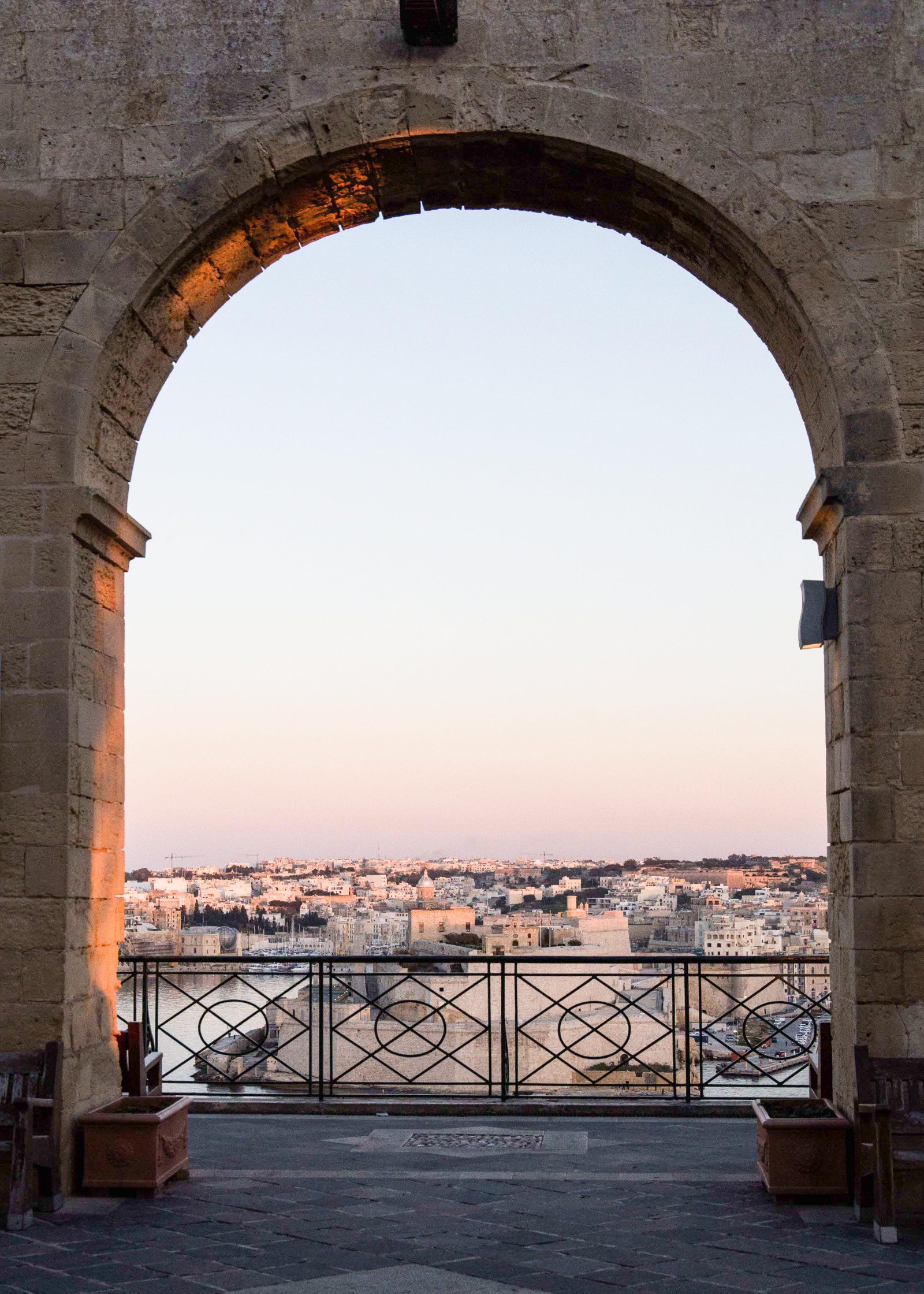
Upper Barrakka Gardens
These terraced gardens offer a view across the Grand Harbour and the Three Cities. The site features a series of arches and the Saluting Battery below.
Arrive early to watch the daily cannon firing ceremony.

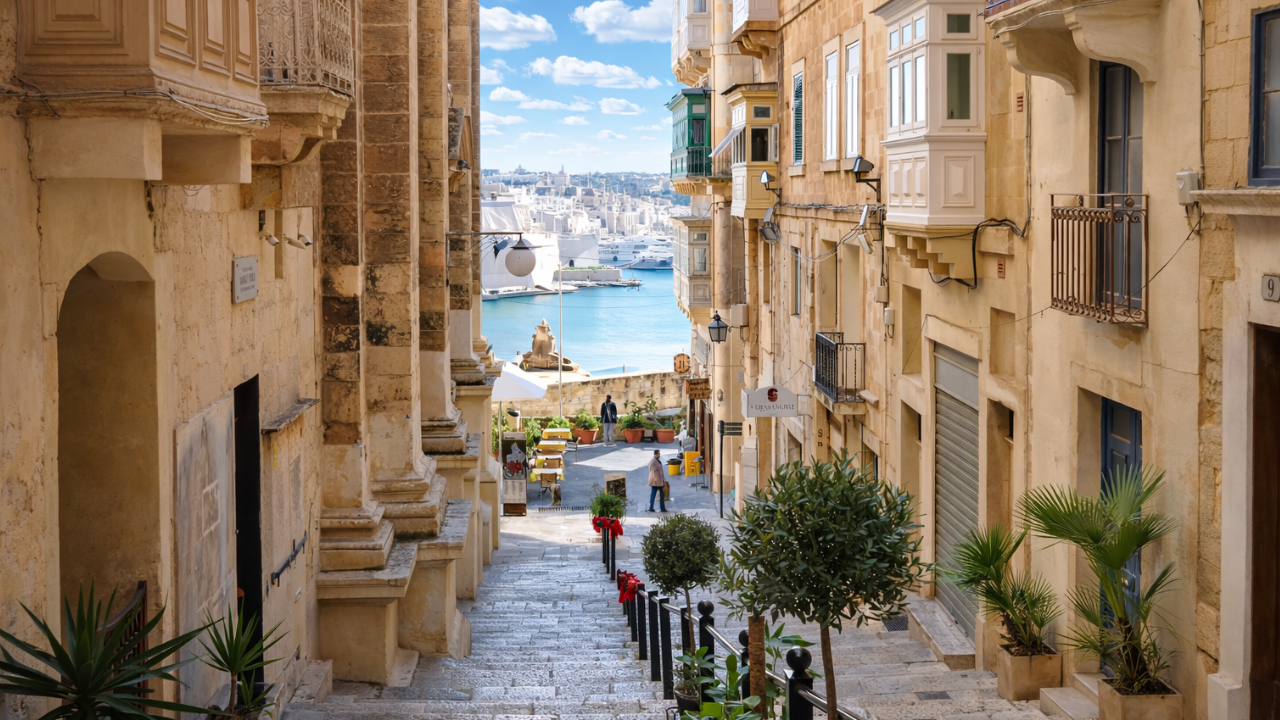
Valletta's grid is deceptive—sixteen straight streets run ridge to harbor, each dropping steeply between bastions that took the Knights of St John forty years to complete. The city is open around the clock, but the experience shifts dramatically with the hour. This guide maps the core circuit, the landmarks that anchor it, and the arrival window that delivers shade and quiet.
Quick answer
A valletta walking tour self guided is free to navigate year-round, with public streets and squares accessible 24 hours daily. The optimal start window is 08:00–10:30, before mid-day heat intensifies and cruise ship groups flood the upper bastions. The full circuit—from City Gate to Fort St Elmo and back via the waterfront—covers approximately 3.5 kilometers and reveals the geometric precision of Europe's first planned Renaissance city.
Valletta was built as a fortress first and a city second, which explains why every sightline ends in stone and why the street grid feels more like a military diagram than an organic settlement. The Knights laid out the plan in 1566, immediately after the Great Siege, and construction proceeded with such discipline that the resulting city became a textbook case in Renaissance urban design. Today that grid makes a self-guided walking tour straightforward—you cannot get lost, because every street runs parallel or perpendicular to the peninsula's spine. The valletta walking tour self guided route begins at City Gate, where Renzo Piano's modern bridge bisects the baroque entrance bastion. From there, Republic Street runs the city's full length, a limestone corridor lined with merchant balconies and parish churches. The street drops 50 meters over its 1.2-kilometer span, which means the return leg climbs steadily—a detail that matters in summer. Side streets peel off at right angles, each ending at a bastion overlook: St James Cavalier to the west, St John's Cavalier to the east, and Fort St Elmo at the peninsula's tip, where the Great Siege reached its climax in 1565. The architecture is relentlessly golden—local globigerina limestone weathers to a warm ochre, and every facade, step, and fortification shares the same mineral glow. That uniformity is interrupted only by the co-cathedral's austere exterior on St John's Street, which conceals Caravaggio's Beheading of Saint John and a floor inlaid with 400 marble tombstones. Beyond the cathedral, the National Museum of Archaeology occupies the Auberge de Provence, and the Grandmaster's Palace stretches an entire city block, its state rooms still used for official functions. Timing the walk to avoid the cruise ship pulse is not optional. Most large vessels dock at 08:00 and release passengers by 09:30, flooding Republic Street and the Upper Barrakka Gardens until mid-afternoon. Arriving before 08:30 means encountering the city as residents do—shopkeepers sweeping thresholds, morning light raking across the bastions, and enough shade to walk comfortably. The same route attempted at noon in July becomes an exercise in heat management. Valletta's stone amplifies sun, and the narrow streets trap it, which is why locals retreat indoors between 12:00 and 16:00. The full circuit, including detours to the bastions and the lower waterfront, takes three to four hours at a measured pace. That estimate assumes stops to read plaques, climb ramparts, and sit long enough to notice the city's geometric clarity. A self-paced Valletta route is not about covering ground quickly—it is about recognizing that the entire peninsula was designed as a single, coherent military instrument, and that every street, gate, and overlook serves that original logic.
“Valletta was built as a fortress first and a city second, which explains why every sightline ends in stone and why the street grid feels more like a military diagram than an organic settlement.”
The best arrival window is 08:00–10:30 to mitigate Mediterranean heat and heavy cruise ship congestion. Arriving during these hours ensures a more manageable experience through the streets of Valletta.
Mild, 18°C–24°C. Ideal temperatures for walking.
Late spring offers pleasant conditions before summer peak temperatures arrive.
Mild, 20°C–25°C. Comfortable for outdoor exploration.
The sea remains warm and the intense summer heat subsides significantly.
—
Mid-week mornings provide the quietest environment to navigate the city center before day-tripper arrivals.
Verdict: The optimal period for a self-guided tour is Tuesday to Thursday between 08:00–10:30, ideally during the months of April or October.
This route covers Valletta's core landmarks in a logical loop, starting at City Gate and ending near the waterfront. Allow three to four hours at a comfortable pace, with time for stops at viewpoints and interiors.
Enter through Renzo Piano's modern gateway and pass the monumental limestone Parliament. Take a moment to appreciate the contrast between contemporary architecture and the historic bastions.
Walk straight down Republic Street, the main artery lined with shops and cafés. The Co-Cathedral is midway; its plain exterior hides an ornate Baroque interior worth visiting if you have time.
Continue to Palace Square, the civic heart framed by the Grandmaster's Palace. The State Rooms and Armoury are open to the public on most days.
Head to the southern tip for sweeping views over the Grand Harbour and the Three Cities. The Saluting Battery fires at noon, so linger if you're close to that time.
Descend through the narrow side streets to the quieter Lower Barrakka Gardens. The neoclassical temple and harbour perspective offer a different angle on the waterfront.
Take the lift or stairs down to the quayside, where the row of former warehouses now hosts restaurants and craft vendors. This marks a natural end point, with ferry connections to Sliema and the Three Cities.
Valletta is located on a peninsula accessible by public bus and ferry services. The city is pedestrian-friendly, with the main entrance situated at City Gate.
Central Bus Terminus at Valletta City Gate
Sliema to Valletta Ferry
Three Cities (Cospicua) to Valletta Ferry
Walk from Floriana
Arrive at the Central Bus Terminus to reach the City Gate entrance directly. For the most efficient start, plan to arrive between 08:00–10:30.
As a self-guided walking tour, the public streets and squares of Valletta are accessible at all hours throughout the week. This allows travelers to explore the city at their own pace without set entry restrictions.
Valletta features a dense concentration of baroque architecture, public squares, and fortifications accessible to pedestrians. These landmarks provide a focused view of the city's urban layout and defensive heritage.
These terraced gardens offer a view across the Grand Harbour and the Three Cities. The site features a series of arches and the Saluting Battery below.
Arrive early to watch the daily cannon firing ceremony.
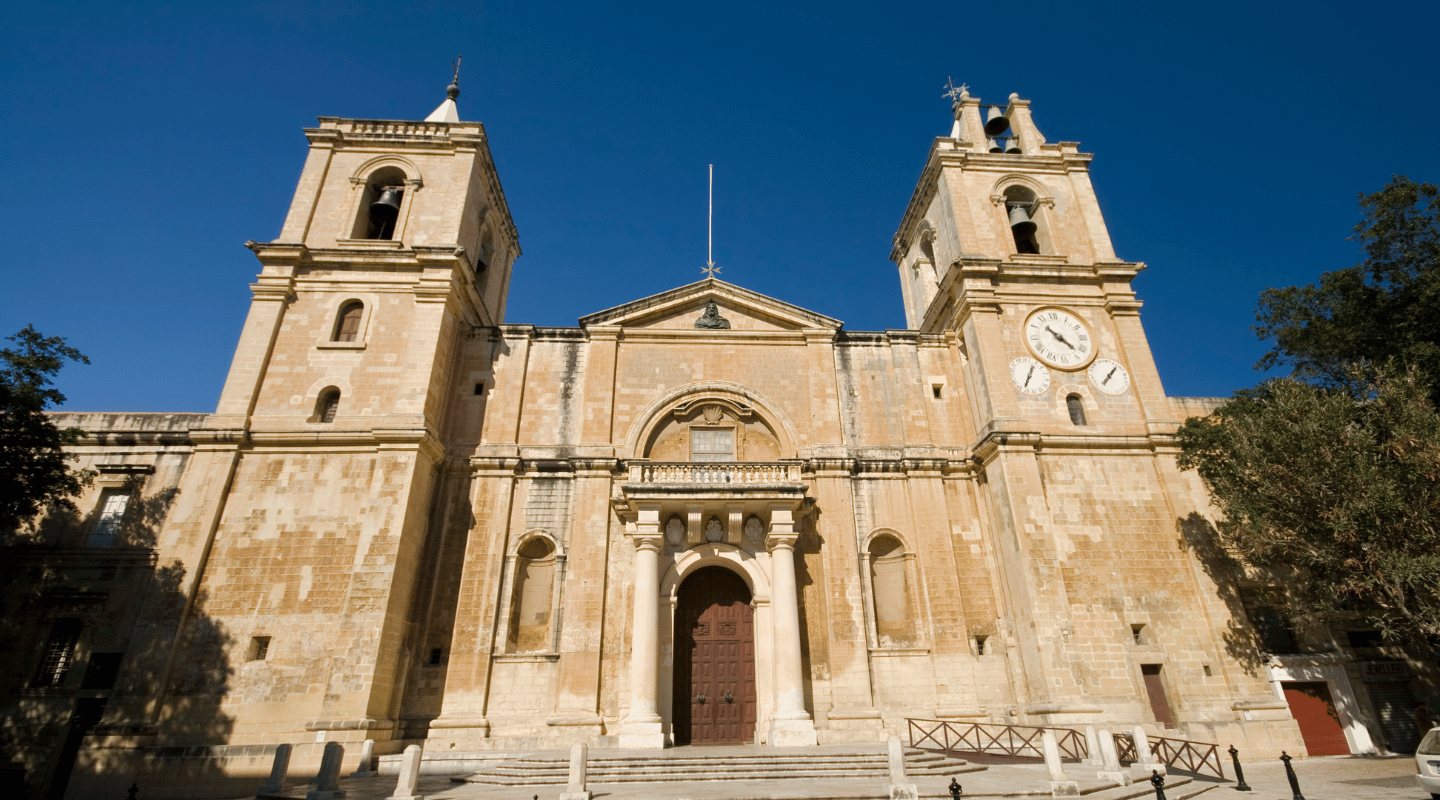
This structure serves as a primary example of Valletta's defensive baroque architecture, featuring a stark facade contrasting with its ornate interior. It dominates the surrounding square area.
Observe the facade detail from the center of the square.
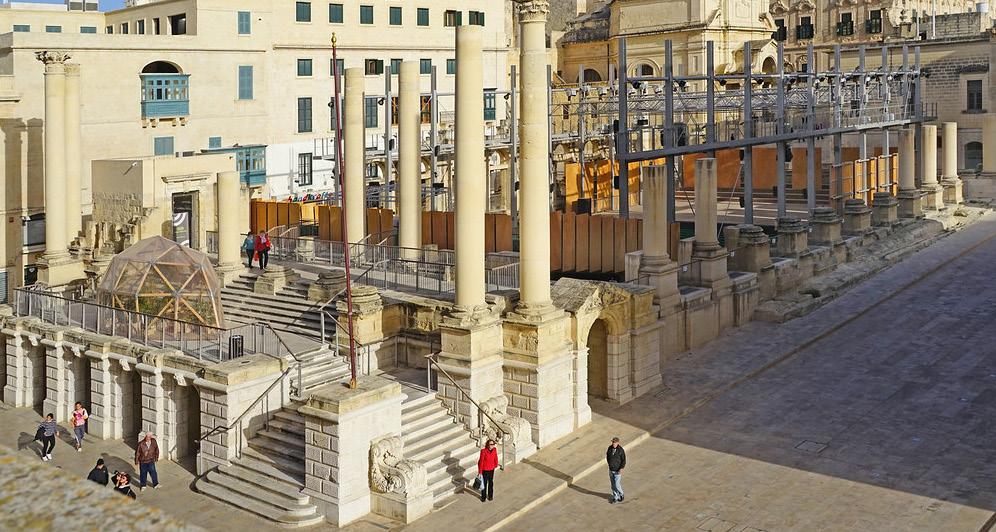
Occupying the site of the former Royal Opera House, this open-air venue preserves the original columns and ruins. It functions as a public space within the city entrance.
Walk the perimeter to view the preserved masonry.
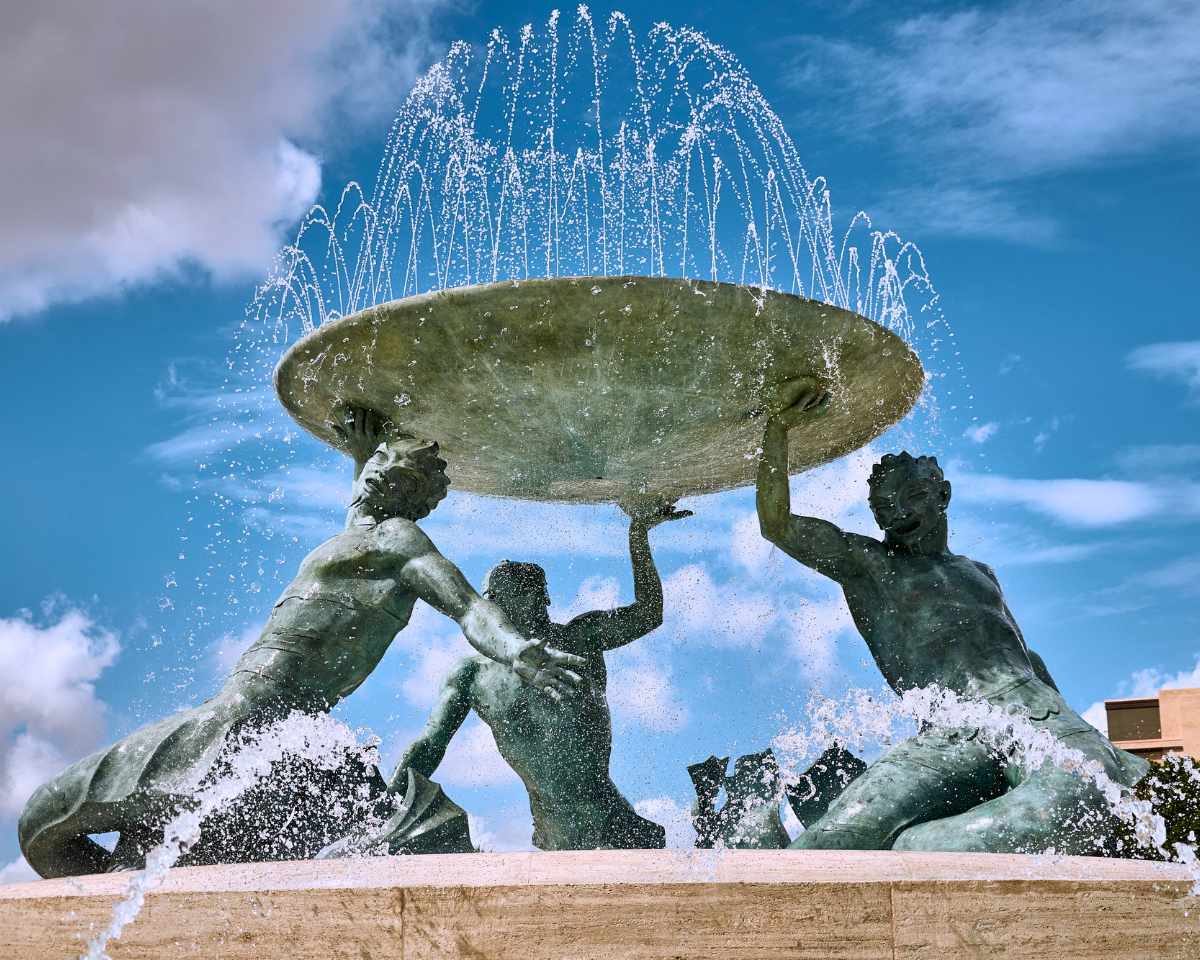
Situated just outside the City Gate, this large modernist fountain features three bronze figures supporting a basin. It marks the main entry point into the pedestrianized city center.
View the fountain from the City Gate bridge.
Practical preparation ensures your self-guided exploration of Valletta remains comfortable despite the city's unique topography.
Wear shoes with high-grip rubber soles to maintain traction on the smooth, polished limestone streets that become slippery when worn. Avoid heels or thin-soled sandals as the city's steep inclines and uneven surfaces are demanding on your feet.
Expect frequent stone staircases instead of inclined streets when moving between parallel roads. Use the handrails found on many historic stairways, as these steps vary significantly in height and depth.
Sun exposure is intense due to light-reflecting limestone facades. Wear a wide-brimmed hat and apply high-SPF sunscreen, as the narrow streets do not guarantee consistent shade throughout the day.
Carry a reusable water bottle and refill it at public fountains located in major squares. Valletta's high temperatures make frequent hydration necessary, even during shorter walks.
Download an offline map before starting, as thick masonry walls in Valletta can disrupt GPS signals in narrow alleys. Use the city's grid layout, which allows you to easily reorient yourself by walking toward the sea breeze.
Everything you need to know about valletta walking tour self guided
Yes, you can explore the city at your convenience as public streets and squares are accessible 24 hours a day. A valletta walking tour self guided provides the flexibility to set your own pace throughout the week. There is no official entry fee for accessing the public areas of the city. A valletta walking tour self guided allows you to enjoy the historic architecture without any ticket requirements. We recommend starting between 08:00 and 10:30 to avoid peak temperatures and the busiest arrival times for cruise ship visitors. Planning your valletta walking tour self guided during this window ensures a more comfortable experience. While there are no set routes, most visitors focus on the main bastions, Upper Barrakka Gardens, and St. John's Co-Cathedral. A valletta walking tour self guided gives you the freedom to choose your own path through the grid of streets. The city is highly walkable, though some areas feature steep inclines and stone stairs. Exploring Valletta landmarks requires comfortable footwear and an awareness of the narrow, limestone-paved corridors. Yes, the entire city is a UNESCO World Heritage site that welcomes independent explorers. A self-directed journey allows you to appreciate the baroque facades and military architecture at your leisure.